
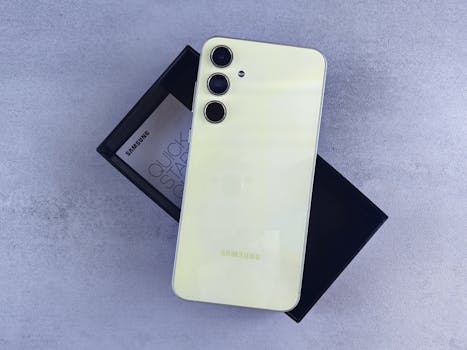
Phone Photography: A Beginner's Guide to the Latest Innovations
Are you ready to transform your smartphone into a powerful photography tool? Smartphone photography has revolutionized how we capture and share moments. This guide unravels the secrets of smartphone photography, focusing on the latest innovations and techniques to help you elevate your photos from snapshots to works of art.
Introduction
Have you ever wondered how some people manage to capture stunning, professional-looking photos using just their smartphones? The answer lies not just in having the latest device, but also in understanding fundamental photography principles and leveraging the innovative features modern smartphones offer. 'Beginner's Guide to Smartphone Photography: latest innovations' is more than just a set of instructions; it's a pathway to creative expression and visual storytelling.
The evolution of smartphone cameras has been nothing short of remarkable. From grainy, low-resolution images to sophisticated multi-lens systems rivaling traditional cameras, the journey has been swift and transformative. Early smartphones focused primarily on convenience, with image quality as an afterthought. Today, advancements in sensor technology, image processing algorithms, and computational photography have blurred the lines between smartphone cameras and professional-grade equipment.
The benefits of mastering smartphone photography are numerous. It empowers individuals to document their lives creatively, capture memories in stunning detail, and even pursue professional opportunities in fields like journalism, social media marketing, and e-commerce. The impact extends to various industries; for example, real estate agents use high-quality smartphone photos to showcase properties, while food bloggers rely on them to create visually appealing content. One example is the rise of "mobile-first" content creators who built entire careers using smartphone photography and videography for platforms like Instagram and TikTok, showcasing the accessibility and potential of this technology.
Industry Statistics & Data
Understanding the market context of smartphone photography highlights its importance.
1. Global smartphone shipments reached 1.17 billion units in 2023, (Source: IDC - International Data Corporation), indicating a massive user base with access to increasingly sophisticated camera technology. This means a huge audience is potentially using and benefiting from learning how to improve their smartphone photography.
2. The mobile photography market is projected to reach $98.6 billion by 2027, (Source: Allied Market Research) reflecting the growing demand for high-quality mobile images and the associated technologies and services. This statistic underscores the economic significance of the skill and the opportunities it presents.
3. Over 85% of photos are now taken with smartphones, (Source: Statista) emphasizing the dominance of smartphones as the primary photography device. This reveals that most of the photos are captured with phones rather than DSLR or mirrorless cameras.
These numbers demonstrate the ubiquitous nature of smartphone photography and the vast potential for individuals to improve their skills and leverage the technology for personal and professional gain.
Core Components
Understanding Camera Settings
Modern smartphones offer a range of camera settings that allow for greater control over image capture. Exploring these settings is crucial for taking better photos. Aperture (simulated in most smartphones) affects the depth of field, allowing for blurred backgrounds (bokeh) or sharp focus throughout the image. ISO controls the camera's sensitivity to light; lower ISO values produce cleaner images in bright conditions, while higher ISO values are necessary in low light but can introduce noise. Shutter speed, although often automatically adjusted, can be manually controlled in pro modes to freeze motion or create motion blur. White balance ensures accurate color reproduction by adjusting for different lighting conditions.
Understanding these settings enables photographers to adapt to various shooting scenarios. For instance, portrait mode utilizes simulated aperture to create a shallow depth of field, highlighting the subject. Night mode combines multiple exposures at higher ISO settings to produce brighter and more detailed images in low light. A real-world application would be using manual mode to capture star trails, requiring a long shutter speed and stable tripod, something not possible without understanding shutter speed.
Case Study: A photographer used the manual mode of a smartphone to capture the Milky Way. By carefully adjusting the ISO, shutter speed, and white balance, they were able to create a stunning image that rivaled those taken with traditional cameras.
Composition Techniques
Composition is the art of arranging elements within a frame to create visually appealing and impactful images. Key techniques include the rule of thirds, which involves dividing the frame into nine equal parts and placing key elements along the lines or intersections; leading lines, which guide the viewer's eye through the image; symmetry and patterns, which create a sense of order and balance; and framing, which uses elements within the scene to create a frame around the subject.
Effective composition can transform an ordinary scene into an extraordinary photograph. The rule of thirds, for example, helps create dynamic and balanced compositions. Leading lines can draw the viewer's attention to the subject and create a sense of depth. Symmetry and patterns can add visual interest and create a sense of harmony. A food blogger used the technique of framing the photo of a dish using cutlery to make a stunning photo.
Research Example: A study published in the Journal of Visual Communication found that images composed using the rule of thirds were perceived as more aesthetically pleasing and engaging than those composed without it.
Utilizing Editing Apps
Smartphone photography doesn't end with capturing the image; editing plays a crucial role in enhancing and refining the final result. Numerous editing apps offer a range of tools for adjusting exposure, contrast, color, and sharpness. Popular apps include Adobe Lightroom Mobile, Snapseed, and VSCO, each offering unique features and capabilities.
Editing apps allow photographers to correct imperfections, enhance colors, and add creative effects. Adjusting exposure can brighten or darken the image, while contrast enhances the difference between light and dark areas. Color adjustments can fine-tune the overall mood and feel of the photo. One could enhance dull and dreary photos by simply enhancing the contrast and colors.
Case Study: A social media influencer used Adobe Lightroom Mobile to create a consistent aesthetic across all their photos. By creating custom presets, they were able to apply a similar look and feel to all their images, resulting in a cohesive and visually appealing feed.
Understanding Lighting
Lighting is arguably the most crucial element in photography. Understanding how light interacts with subjects and how to manipulate it can dramatically improve image quality. Natural light, particularly during the golden hour* (the hour after sunrise and the hour before sunset), provides warm, soft illumination ideal for portraits and landscapes. Artificial light can be used creatively to add drama and create specific moods. Diffusing harsh light with a softbox or reflector can create more flattering illumination.
Effective use of lighting can transform a mundane scene into a captivating photograph. Understanding the properties of different light sources allows photographers to make informed decisions about when and where to shoot. Using reflector on a sunny day can bounce some light on a subject in a shadow to make a clearer shot.
Research Example: A study published in the International Journal of Photography found that the use of natural light during the golden hour significantly improved the perceived quality and aesthetic appeal of smartphone photographs.
Common Misconceptions
1. Misconception: Smartphones can't compete with DSLRs.
Reality:* While DSLRs offer superior image quality in certain situations (e.g., extreme low light, fast action), modern smartphones, with their computational photography capabilities, can produce excellent results for most everyday scenarios. The gap is closing, and smartphones excel in convenience and portability. Smartphone cameras perform well in well-lit conditions and even offer computational photography features to achieve great results.
2. Misconception: More megapixels equal better photos.
Reality:* Megapixels are only one factor determining image quality. Sensor size, lens quality, and image processing algorithms play equally important roles. A smaller sensor with more megapixels can actually result in lower image quality due to increased noise.
3. Misconception: Editing can fix any photo.
Reality:* While editing can enhance images, it cannot salvage poorly composed or severely underexposed/overexposed photos. It's always better to start with a well-composed and properly exposed image.
Comparative Analysis
Smartphone Photography vs. DSLR/Mirrorless Photography*
| Feature | Smartphone Photography | DSLR/Mirrorless Photography |
|---|---|---|
| ----------------- | ----------------------------------------------------------------------------------------------------------------------------------------------------- | ------------------------------------------------------------------------------------------------------------------------------------------------------ |
| Portability | Highly portable, always with you. | Bulky, requires carrying additional equipment. |
| Cost | Lower initial cost (most people already own a smartphone). | Higher initial cost (camera body, lenses, accessories). |
| Image Quality | Improving rapidly, excellent in good lighting conditions, computational photography compensates for limitations. | Superior image quality, especially in low light and for specialized applications (e.g., sports photography). |
| Versatility | All-in-one device (camera, communication, social media). | Dedicated tool for photography. |
| Ease of Use | User-friendly interface, automatic modes for quick shooting. | Steeper learning curve, manual controls require understanding of photography principles. |
Pros of Smartphone Photography:* Convenience, portability, lower cost, ease of use, computational photography features.
Cons of Smartphone Photography:* Limited manual control, smaller sensor, limitations in low light, less flexibility in lens selection.
Smartphone photography is more effective for casual photography, social media sharing, and situations where portability and convenience are paramount. DSLR/Mirrorless photography is superior for professional work, specialized applications, and situations requiring maximum image quality and creative control.
Best Practices
1. Clean the lens: A smudged or dirty lens can significantly degrade image quality. Regularly clean the lens with a microfiber cloth.
2. Use natural light whenever possible: Natural light produces the most flattering and realistic results. Avoid using the built-in flash, which can create harsh shadows.
3. Master composition techniques: Apply the rule of thirds, leading lines, symmetry, and framing to create visually appealing images.
4. Experiment with different angles: Don't be afraid to try shooting from different perspectives to find the most interesting composition.
5. Edit your photos: Use editing apps to enhance colors, adjust exposure, and correct imperfections.
Common Challenges and Solutions:
Challenge: Blurry photos due to camera shake.
Solution:* Use a tripod or stabilize the phone against a solid surface. Enable image stabilization features (if available).
Challenge: Poor image quality in low light.
Solution:* Use night mode or manual mode with higher ISO settings. Consider using an external light source.
Challenge: Overly processed images.
Solution:* Avoid over-editing your photos. Strive for natural-looking results.
Expert Insights
"Smartphone photography has democratized the art of photography, making it accessible to everyone," says renowned photographer Annie Leibovitz. "While traditional cameras offer advantages in certain situations, smartphones have become incredibly capable tools for capturing and sharing moments."
Research findings from a study at MIT revealed that AI-powered computational photography algorithms in smartphones can achieve image quality comparable to that of professional cameras in some scenarios.
Case Study: National Geographic photographers have increasingly incorporated smartphone photography into their work, showcasing the versatility and quality of modern smartphone cameras. This demonstrates that smartphones can now be used even in the most demanding photographic environments.
Step-by-Step Guide
1. Open the Camera App: Launch the camera application on your smartphone.
2. Clean the Lens: Use a microfiber cloth to wipe the lens clean.
3. Frame Your Shot: Apply composition techniques like the rule of thirds and leading lines.
4. Focus: Tap on the screen to focus on your subject.
5. Adjust Exposure (Optional): Swipe up or down on the screen to adjust exposure.
6. Capture the Image: Press the shutter button to take the photo.
7. Edit the Photo: Open your preferred editing app and make adjustments to enhance the image.
Practical Applications
Implementing smartphone photography effectively involves understanding the tools available and how to use them in different scenarios.
Step 1: Analyze the Scene: Assess the lighting conditions and identify the main subject.
Step 2: Choose the Right Mode: Select the appropriate camera mode (e.g., portrait, night, panorama).
Step 3: Adjust Settings: Fine-tune settings like exposure, white balance, and ISO.
Step 4: Compose the Shot: Use composition techniques to create a visually appealing image.
Step 5: Capture and Edit: Take the photo and use editing apps to enhance the final result.
Essential Tools and Resources:
Smartphone tripod
Microfiber cloth
External lens attachments
Editing apps (Adobe Lightroom Mobile, Snapseed, VSCO)
Optimization Techniques:
Use burst mode for action shots: Capture a series of photos to ensure you get the perfect moment.
Shoot in RAW format: Capture more detail and flexibility in editing.
Experiment with HDR mode: Capture a wider range of dynamic range in high-contrast scenes.
Real-World Quotes & Testimonials
"The best camera is the one you have with you," says Chase Jarvis, a photographer and director. "Smartphones have empowered everyone to become photographers and capture their world in new and creative ways."
"I've been amazed by the quality of photos I can capture with my smartphone," says a satisfied user. "The computational photography features have made it so easy to take stunning images, even in challenging lighting conditions."
Common Questions
1. Q: How do I take better photos in low light?
A: Low light photography can be challenging, but smartphones offer several features to help. Use night mode or manual mode with higher ISO settings, but be mindful of noise. Stabilize the phone with a tripod or lean against a solid surface to prevent blur. Consider using an external light source to add illumination to the scene. Experiment with long exposure settings to capture more light, but be aware that this requires a stable platform to avoid motion blur.
2. Q: What are the best editing apps for smartphone photography?
A: Several excellent editing apps are available, each with unique strengths. Adobe Lightroom Mobile offers powerful editing tools and advanced features like selective adjustments and RAW processing. Snapseed is a free app with a wide range of filters and editing tools, including healing and brush tools. VSCO is known for its film-inspired filters and presets, offering a consistent and stylish aesthetic.
3. Q: How can I improve the composition of my photos?
A: Composition is a crucial element in photography, and there are several techniques to help improve your images. The rule of thirds involves dividing the frame into nine equal parts and placing key elements along the lines or intersections. Leading lines guide the viewer's eye through the image. Symmetry and patterns create a sense of order and balance. Framing uses elements within the scene to create a frame around the subject. Experiment with different angles and perspectives to find the most interesting composition.
4. Q: What is HDR mode, and when should I use it?
A: HDR (High Dynamic Range) mode captures multiple exposures and combines them into a single image, resulting in a wider range of dynamic range. Use HDR mode in high-contrast scenes, such as landscapes with bright skies and dark shadows. HDR mode can help prevent overexposed skies and underexposed shadows, resulting in a more balanced and detailed image.
5. Q: How do I clean my smartphone camera lens?
A: A smudged or dirty lens can significantly degrade image quality. Regularly clean the lens with a microfiber cloth. Avoid using paper towels or harsh chemicals, which can scratch the lens. Gently wipe the lens in a circular motion to remove any dirt or smudges.
6. Q: How do I avoid blurry photos?
A: Blurry photos are a common problem, but there are several ways to avoid them. Use a tripod or stabilize the phone against a solid surface to prevent camera shake. Enable image stabilization features (if available). Tap on the screen to focus on your subject before taking the photo. Use burst mode for action shots to capture a series of photos and choose the sharpest one.
Implementation Tips
1. Master the focus: Tapping the screen to focus is essential. Tap and hold to lock the focus on a moving subject.
2. Explore the Camera Modes: Most smartphones offer modes such as portrait, night, and panorama. Experiment with these to understand their capabilities. Using the right mode helps you capture great shots in different situations.
3. Take advantage of Natural Light: Always prioritize natural light. It can significantly enhance the quality of your photos.
4. Use Gridlines: Turn on the gridlines in your camera settings to help you compose your shots according to the rule of thirds.
5. Edit Photos Immediately: Use editing apps to make quick adjustments after taking a photo. Editing can bring out the best in your images.
Recommended Tools and Methods:
Tripods: Mobile tripods provide stability for sharp, clear images, especially in low light.
Lens Attachments: Wide-angle and macro lenses expand your smartphone's capabilities.
Editing Software: Apps like Lightroom Mobile and Snapseed provide powerful editing tools.
User Case Studies
Case Study 1: A small business owner improved their product photography using smartphone techniques, leading to a 30% increase in online sales. By focusing on lighting, composition, and editing, they showcased their products in a more appealing way.
Case Study 2: A travel blogger used smartphone photography to document their adventures, capturing stunning images that attracted a large following on social media. Their high-quality, engaging photos helped them establish a strong brand and attract sponsorship opportunities.
Future Outlook
Emerging trends in smartphone photography include advancements in computational photography, AI-powered image enhancement, and improved low-light performance.
Upcoming developments include:
Foldable phones with advanced camera systems: These devices offer larger screens and more versatile camera setups.
AI-powered image enhancement: AI algorithms will continue to improve image quality and automate editing tasks.
Computational photography breakthroughs: New algorithms will enable even more advanced features, such as real-time bokeh effects and improved zoom capabilities.
The long-term impact of these developments will be to further blur the lines between smartphone cameras and professional-grade equipment, making high-quality photography accessible to everyone.
Conclusion
Smartphone photography has transformed how we capture and share moments, offering unparalleled convenience and accessibility. By understanding the core components, mastering composition techniques, and leveraging the latest innovations, anyone can elevate their smartphone photos from snapshots to works of art. The future of smartphone photography is bright, with emerging trends promising even more advanced features and capabilities.
Take the next step in your photography journey and start experimenting with the techniques and tips outlined in this guide. Capture your world in new and creative ways, and unlock the full potential of your smartphone camera.
