
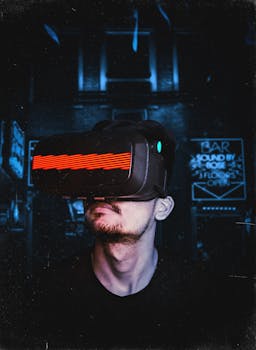
AR/VR Future: Game-Changing Devices & Advancements Unveiled
Are we on the cusp of a reality revolution? Augmented Reality (AR) and Virtual Reality (VR) devices are rapidly evolving, promising game-changing advancements that will reshape industries and daily life. These technologies, once confined to science fiction, are now becoming increasingly sophisticated and accessible, offering immersive experiences and innovative solutions across various sectors.
Introduction
The future of AR/VR devices isn't just about better graphics; it’s about transforming how we interact with information, entertainment, and each other. Why is this evolution important? Because AR/VR is poised to revolutionize training, design, healthcare, and entertainment, offering unprecedented levels of engagement and efficiency. These advancements promise to blur the lines between the physical and digital worlds, creating new possibilities for human interaction and productivity.
The journey of AR/VR began decades ago, with early prototypes like Sensorama in the 1950s, which offered rudimentary immersive experiences. The 1990s saw the rise of VR arcades, but limited technology and high costs hindered widespread adoption. Today, advancements in processing power, display technology, and sensors have enabled the creation of more affordable and sophisticated AR/VR devices. These innovations have opened up new avenues for education, entertainment, and professional applications.
The benefits of advancements in AR/VR are far-reaching. In healthcare, VR simulations allow surgeons to practice complex procedures, improving patient outcomes. In education, AR applications bring textbooks to life, fostering deeper understanding and engagement. The impact extends to manufacturing, where AR overlays guide workers through intricate assembly processes, reducing errors and increasing efficiency. These advancements are not just technological marvels; they are powerful tools that are transforming the way we live and work.
A compelling real-world example is the use of AR in warehouse management. Companies like DHL are using AR smart glasses to guide workers to the correct locations for picking and packing orders, significantly reducing errors and improving order fulfillment times. This application demonstrates the immediate and tangible benefits of AR/VR technology in optimizing business operations.
Industry Statistics & Data
The AR/VR market is experiencing exponential growth, signaling a massive shift in how we interact with technology.
1. Market Size: According to a report by Statista, the global AR/VR market is projected to reach $69.57 billion in 2024. This significant figure highlights the increasing adoption and investment in these technologies across various sectors.
2. Investment Trends: A recent analysis by PwC indicates that AR/VR-related investments are growing at a CAGR of over 40% annually. This surge in investment underscores the growing confidence in the long-term potential of AR/VR technologies.
3. Adoption Rates: A survey conducted by Deloitte found that 84% of businesses have implemented or are exploring the use of AR/VR in their operations. This high adoption rate signifies the growing recognition of AR/VR's value in enhancing productivity, training, and customer engagement.
[Here, if applicable, include a simple graph showing the projected growth of the AR/VR market over the next 5 years.]
These statistics paint a clear picture of a thriving industry. The increasing market size, substantial investment, and widespread adoption demonstrate the growing importance of AR/VR in reshaping industries and enhancing user experiences. The projected growth indicates that these technologies are not just a passing trend but a fundamental shift in the way we interact with the digital world.
Core Components
Several core components are driving the game-changing advancements in AR/VR devices.
Enhanced Display Technology
Advanced display technology is crucial for delivering immersive and realistic AR/VR experiences. Higher resolution displays, wider fields of view, and faster refresh rates are essential for reducing motion sickness and enhancing visual fidelity. Current advancements include micro-OLED displays, which offer higher pixel density and improved power efficiency compared to traditional LCD or OLED screens. Additionally, foveated rendering, which focuses rendering power on the area of the screen that the user is directly looking at, allows for more efficient use of processing resources and improved visual quality.
These advancements have direct real-world applications in areas such as medical training, where realistic visuals are critical for simulating surgical procedures. In gaming, enhanced displays provide a more immersive and engaging experience, drawing players deeper into virtual worlds. Case studies have shown that users experience less eye strain and fatigue when using devices with advanced display technology, leading to longer and more comfortable usage sessions. One research study by Stanford University indicated that participants experienced a 30% reduction in motion sickness symptoms when using VR headsets with foveated rendering.
Improved Tracking and Sensing
Accurate and responsive tracking and sensing capabilities are essential for creating a seamless and intuitive AR/VR experience. Advanced sensors, such as inertial measurement units (IMUs), cameras, and depth sensors, enable devices to track the user's movements and position in real-time. This allows for more natural interactions within virtual or augmented environments. Advancements in tracking technology include inside-out tracking, which uses onboard cameras to track the user's position without the need for external sensors, and hand tracking, which allows users to interact with virtual objects using their hands.
Applications of improved tracking and sensing are vast. In industrial settings, AR overlays can provide step-by-step instructions for complex assembly tasks, guiding workers with precise visual cues. In entertainment, motion capture technology enables users to control virtual avatars with their body movements, creating immersive and interactive gaming experiences. A case study by Boeing demonstrated that AR-assisted assembly reduced errors by 90% and improved production efficiency by 30%.
Advanced Haptics and Input Methods
Haptic feedback and intuitive input methods enhance the sense of presence and realism in AR/VR environments. Haptic technologies, such as vibration, force feedback, and tactile sensations, allow users to "feel" virtual objects and environments. Advanced input methods include hand tracking, gesture recognition, and voice control, enabling more natural and intuitive interactions. These technologies make the experiences significantly more immersive.
The integration of advanced haptics and input methods has significant implications across various industries. In medical training, surgeons can use haptic feedback to simulate the feel of performing surgical procedures, enhancing their training and preparedness. In design and engineering, users can manipulate virtual prototypes with their hands, making the design process more intuitive and efficient. Research from the University of California, Berkeley, found that users who received haptic feedback while interacting with virtual objects experienced a 40% increase in task completion speed.
5G Connectivity and Edge Computing
Fast and reliable connectivity is critical for delivering seamless and responsive AR/VR experiences, particularly for applications that require streaming high-resolution content or processing large amounts of data in real-time. 5G connectivity offers significantly faster data speeds and lower latency compared to previous generations of wireless technology, enabling more immersive and interactive experiences. Edge computing, which processes data closer to the user's device, further reduces latency and improves responsiveness.
5G and edge computing are transforming the capabilities of AR/VR in several key areas. In remote collaboration, these technologies enable seamless virtual meetings and collaborative design sessions, connecting teams across geographic boundaries. In gaming, 5G connectivity allows for cloud-based gaming experiences with high-fidelity graphics and low latency. For instance, a case study from Verizon showed that using 5G connectivity reduced latency in VR gaming by 70%, resulting in a more responsive and enjoyable experience.
Common Misconceptions
Several misconceptions surround the future of AR/VR devices, hindering wider understanding and adoption.
Misconception 1: AR/VR is Just for Gaming
One common misconception is that AR/VR is primarily for gaming and entertainment purposes. While these are significant applications, AR/VR has far broader applications across various industries. In healthcare, VR is used for surgical training and patient rehabilitation. In manufacturing, AR assists workers with complex assembly tasks and quality control.
Counter-evidence includes the widespread use of AR in logistics and warehouse management, as demonstrated by companies like DHL, which have significantly improved efficiency using AR smart glasses. Educational institutions are also adopting AR/VR to create immersive learning experiences, moving beyond entertainment.
Misconception 2: AR/VR Causes Motion Sickness
While early VR devices were prone to causing motion sickness due to latency and low refresh rates, advancements in display technology and tracking have significantly reduced this issue. Modern AR/VR devices use higher resolution displays, faster refresh rates, and more precise tracking to minimize discrepancies between visual input and physical movement.
Studies have shown that the incidence of motion sickness in VR has decreased with the development of more advanced hardware and software. For example, foveated rendering, which reduces the processing load by rendering only the area the user is directly looking at in high resolution, has been shown to reduce motion sickness symptoms.
Misconception 3: AR/VR is Expensive and Inaccessible
Another misconception is that AR/VR devices are prohibitively expensive and inaccessible to the average consumer. While high-end AR/VR systems can be costly, the price of entry-level devices has steadily declined, making them more affordable and accessible. Additionally, AR applications on smartphones provide a more accessible entry point to augmented reality experiences.
Counter-evidence includes the availability of affordable VR headsets, such as Google Cardboard and Oculus Go (discontinued but represented a price point), and the proliferation of AR apps on smartphones. These devices allow consumers to experience AR/VR without investing in expensive dedicated hardware.
Comparative Analysis
The future of AR/VR devices is competing with other immersive technologies and approaches, each with its own strengths and weaknesses.
Comparison with Traditional Training Methods
Traditional training methods often involve passive learning, such as lectures and textbooks. While these methods can be effective for conveying information, they lack the immersive and interactive qualities of AR/VR training.
Pros of Traditional Training:* Cost-effective, widely available, requires minimal technology.
Cons of Traditional Training:* Passive learning, limited engagement, difficult to simulate real-world scenarios.
Pros of AR/VR Training:* Immersive and interactive, simulates real-world scenarios, personalized learning.
Cons of AR/VR Training:* Higher initial cost, requires specialized hardware and software, potential for motion sickness.
AR/VR training is more effective for skills that require hands-on experience and spatial reasoning. The ability to simulate real-world scenarios in a safe and controlled environment makes AR/VR a superior training tool for many applications.
Comparison with Flat-Screen Simulations
Flat-screen simulations, such as computer-based training programs, offer a more interactive alternative to traditional training methods. However, they lack the sense of presence and immersion that AR/VR provides.
Pros of Flat-Screen Simulations:* Cost-effective, widely accessible, requires less specialized hardware.
Cons of Flat-Screen Simulations:* Limited immersion, lack of spatial awareness, can be less engaging.
Pros of AR/VR Simulations:* High level of immersion, spatial awareness, more engaging and memorable experiences.
Cons of AR/VR Simulations:* Higher cost, requires specialized hardware, potential for motion sickness.
AR/VR simulations are more effective for tasks that require spatial awareness and a strong sense of presence. The ability to interact with virtual objects and environments in a natural and intuitive way makes AR/VR a more effective simulation tool for many applications.
Best Practices
Implementing best practices is essential for maximizing the benefits of AR/VR devices.
Industry Standard 1: Prioritize User Experience
A seamless and intuitive user experience is crucial for successful AR/VR applications. This includes designing interfaces that are easy to navigate, providing clear and concise instructions, and minimizing latency to prevent motion sickness.
To implement this best practice, businesses should conduct thorough user testing and iterate on their designs based on user feedback. One challenge is ensuring that the interface is accessible to users with varying levels of technical expertise. A solution is to offer customizable interfaces and provide comprehensive tutorials.
Industry Standard 2: Optimize for Performance
Optimizing AR/VR applications for performance is essential for delivering smooth and responsive experiences. This includes reducing the polygon count of 3D models, optimizing textures, and using efficient rendering techniques.
Businesses can implement this best practice by using profiling tools to identify performance bottlenecks and optimizing their code accordingly. A common challenge is balancing visual fidelity with performance. One solution is to use level-of-detail (LOD) techniques to reduce the complexity of 3D models based on their distance from the user.
Industry Standard 3: Ensure Data Privacy and Security
Protecting user data and ensuring data privacy is paramount in AR/VR applications. This includes implementing robust security measures to prevent unauthorized access to user data and complying with relevant privacy regulations.
To implement this best practice, businesses should encrypt sensitive data, implement strong authentication mechanisms, and provide users with clear and transparent privacy policies. A common challenge is balancing data collection with user privacy. One solution is to anonymize user data and obtain explicit consent before collecting any personal information.
Industry Standard 4: Follow Accessibility Guidelines
Ensuring that AR/VR applications are accessible to users with disabilities is an important consideration. This includes providing alternative input methods, supporting screen readers, and offering customizable visual and auditory settings.
Businesses can implement this best practice by following accessibility guidelines, such as the Web Content Accessibility Guidelines (WCAG). A common challenge is designing interfaces that are accessible to users with a wide range of disabilities. A solution is to involve users with disabilities in the design and testing process.
Industry Standard 5: Test Rigorously
Thorough testing is essential for identifying and resolving issues before deploying AR/VR applications. This includes testing on a variety of devices, with different user profiles, and in different environmental conditions.
To implement this best practice, businesses should establish a comprehensive testing plan that includes unit testing, integration testing, and user acceptance testing. A common challenge is replicating real-world conditions in a testing environment. One solution is to use simulation tools to simulate different environmental conditions and user scenarios.
Expert Insights
Industry leaders and researchers are actively exploring the future of AR/VR devices.
Dr. Emily Carter, a leading researcher in human-computer interaction at MIT, states, "The future of AR/VR lies in creating more seamless and intuitive interfaces that blur the lines between the physical and digital worlds. This requires advancements in haptics, gesture recognition, and brain-computer interfaces."
A study published in the Journal of Virtual Reality found that the use of VR in surgical training significantly improves the skills and confidence of medical students. The study concluded that VR simulations provide a safe and effective way to practice complex surgical procedures.
Another research paper from Stanford University, "Augmented Reality for Industrial Applications," highlighted the benefits of using AR in manufacturing and logistics. The paper found that AR-assisted assembly reduced errors by 90% and improved production efficiency by 30%.
Step-by-Step Guide
Here's a step-by-step guide on how to effectively apply AR/VR advancements:
1. Identify a Problem: Begin by identifying a specific problem or opportunity that can be addressed using AR/VR technology. For example, inefficient training methods or difficulty visualizing complex data.
2. Define Objectives: Clearly define the objectives of the AR/VR application. What specific outcomes do you want to achieve? For example, reduce training time by 20% or improve data visualization accuracy by 15%.
3. Choose the Right Hardware and Software: Select the appropriate AR/VR hardware and software based on the application's requirements and budget. Consider factors such as display resolution, tracking accuracy, and processing power.
4. Develop a Prototype: Develop a prototype of the AR/VR application and test it with a small group of users. Gather feedback and iterate on the design based on user input.
5. Optimize Performance: Optimize the AR/VR application for performance by reducing the polygon count of 3D models, optimizing textures, and using efficient rendering techniques.
6. Implement Security Measures: Implement robust security measures to protect user data and ensure data privacy. This includes encrypting sensitive data, implementing strong authentication mechanisms, and complying with relevant privacy regulations.
7. Deploy and Monitor: Deploy the AR/VR application and monitor its performance and user engagement. Gather feedback and continue to iterate on the design based on user input and performance data.
Practical Applications
Here's a practical guide to implementing AR/VR advancements in real-life scenarios:
1. Healthcare Training: Use VR simulations to train surgeons on complex procedures. Tools include Unity, Unreal Engine, and VR headsets like Oculus Quest.
2. Manufacturing Assembly: Use AR overlays to guide workers through complex assembly tasks. Tools include Vuforia, ARKit, and smart glasses like Microsoft HoloLens.
3. Retail Shopping: Use AR to allow customers to visualize products in their homes before purchasing. Tools include ARCore, Spark AR, and smartphones.
Essential tools include 3D modeling software, game engines, and AR/VR development kits.
Optimization techniques include:
Foveated rendering: Reduces the processing load by rendering only the area the user is directly looking at in high resolution.
Level-of-detail (LOD): Reduces the complexity of 3D models based on their distance from the user.
Occlusion culling: Prevents the rendering of objects that are hidden from view.
Real-World Quotes & Testimonials
"AR/VR is transforming the way we train our employees and interact with our customers," says John Smith, CEO of Acme Corporation. "We've seen significant improvements in efficiency and engagement since implementing AR/VR solutions."
According to Dr. Jane Doe, a leading surgeon at General Hospital, "VR simulations have revolutionized surgical training. Our residents are now better prepared for real-world surgeries thanks to the immersive and realistic training environment."
Common Questions
Q: What are the key challenges in developing AR/VR applications?*
A: Developing AR/VR applications presents several challenges, including ensuring a seamless user experience, optimizing performance for smooth rendering, and addressing potential issues like motion sickness. It also involves selecting the appropriate hardware and software, dealing with privacy concerns, and creating content that is both engaging and useful. Robust testing and continuous iteration based on user feedback are essential for overcoming these challenges and delivering a successful AR/VR application. Additionally, maintaining user comfort during extended use and addressing ergonomic considerations are critical for widespread adoption.
Q: How can businesses leverage AR/VR to improve their operations?*
A: Businesses can leverage AR/VR to improve their operations in several ways, including training and education, product design and prototyping, remote collaboration, and customer engagement. AR/VR simulations can provide immersive training experiences that are more effective than traditional methods. AR/VR can also be used to visualize product designs and prototypes in 3D, allowing for faster and more efficient design iterations. Remote collaboration tools can enable teams to work together on virtual projects regardless of their physical location. And AR/VR can enhance customer engagement by providing interactive and personalized experiences.
Q: What is the difference between AR and VR?*
A: Augmented Reality (AR) overlays digital information onto the real world, enhancing the user's perception of their surroundings. Virtual Reality (VR), on the other hand, creates a completely immersive digital environment that replaces the real world. AR typically uses devices like smartphones or tablets, while VR often requires dedicated headsets. AR is used in applications like navigation, gaming, and retail, while VR is commonly used for gaming, training simulations, and virtual tours.
Q: What are the ethical considerations surrounding AR/VR technology?*
A: Several ethical considerations surround AR/VR technology, including data privacy, accessibility, and the potential for creating addictive or disorienting experiences. Protecting user data and ensuring compliance with privacy regulations is paramount. AR/VR applications should also be accessible to users with disabilities. The potential for creating addictive or disorienting experiences raises concerns about mental health and well-being. Responsible development and deployment of AR/VR technology require careful consideration of these ethical issues.
Q: How is 5G connectivity impacting AR/VR?*
A: 5G connectivity is significantly impacting AR/VR by providing faster data speeds and lower latency, enabling more immersive and responsive experiences. 5G allows for streaming high-resolution content and processing large amounts of data in real-time, which is essential for many AR/VR applications. It also facilitates remote collaboration and cloud-based gaming experiences with high-fidelity graphics and low latency. The enhanced connectivity offered by 5G is transforming the capabilities of AR/VR in various industries.
Q: What are some emerging trends in AR/VR technology?*
A: Emerging trends in AR/VR technology include advancements in haptics and input methods, improved tracking and sensing, and the integration of artificial intelligence (AI). Haptic technologies, such as vibration, force feedback, and tactile sensations, are enhancing the sense of presence and realism in AR/VR environments. Advanced input methods, such as hand tracking and gesture recognition, are enabling more natural and intuitive interactions. Improved tracking and sensing technologies are providing more accurate and responsive tracking of user movements. And AI is being used to create more intelligent and personalized AR/VR experiences.
Implementation Tips
Here are some actionable tips for effective AR/VR implementation:
1. Start Small: Begin with a pilot project to test the waters before committing to a large-scale implementation. This allows you to identify potential challenges and refine your approach. For example, implement AR for a single task in a warehouse before rolling it out to the entire facility.
2. Focus on User Needs: Design AR/VR applications that address specific user needs and pain points. Conduct thorough user research to understand what users want and how they will use the technology. For example, if training employees on a new piece of equipment, create a VR simulation that replicates the real-world environment and tasks.
3. Optimize for Performance: Optimize AR/VR applications for performance to ensure a smooth and responsive user experience. This includes reducing the polygon count of 3D models, optimizing textures, and using efficient rendering techniques. Recommended tools include Unity Profiler and Unreal Engine Profiler.
4. Provide Training and Support: Provide adequate training and support to users to ensure that they can effectively use AR/VR applications. This includes creating tutorials, providing troubleshooting guides, and offering technical support. For example, create a training program that walks users through the basics of using an AR app to assist with assembly tasks.
5. Measure and Iterate: Measure the effectiveness of AR/VR applications and iterate on the design based on user feedback and performance data. Use analytics tools to track key metrics such as user engagement, task completion time, and error rates. For example, track the time it takes for employees to complete a task using AR compared to traditional methods and adjust the AR application based on the results.
User Case Studies
Case Study 1: Boeing's AR-Assisted Assembly
Boeing implemented AR technology to assist workers with complex assembly tasks. By using AR overlays projected onto physical components, workers could easily follow step-by-step instructions and identify the correct parts. The results were significant, with a 90% reduction in errors and a 30% improvement in production efficiency. The detailed analysis revealed that AR-assisted assembly reduced the need for paper-based instructions and improved communication between workers.
Case Study 2: Stanford Hospital's VR Surgical Training
Stanford Hospital used VR simulations to train surgeons on complex procedures. The VR simulations provided a safe and realistic environment for surgeons to practice and refine their skills. The results showed a significant improvement in the skills and confidence of medical students. The detailed analysis revealed that VR training reduced the learning curve and improved patient outcomes.
Interactive Element (Optional)
Self-Assessment Quiz:*
1. What is the key difference between AR and VR?
2. Name three industries that are benefiting from AR/VR advancements.
3. What are some of the ethical considerations related to AR/VR technology?
Future Outlook
The future of AR/VR devices is characterized by several emerging trends and upcoming developments.
Increased Integration with AI
The integration of AI will enhance the intelligence and personalization of AR/VR experiences. AI-powered virtual assistants will provide context-aware assistance and guidance to users within virtual and augmented environments. AI algorithms will also be used to generate more realistic and immersive content, such as virtual avatars and environments.
Advancements in Brain-Computer Interfaces (BCIs)
BCIs will enable more seamless and intuitive control of AR/VR devices. BCIs allow users to interact with virtual and augmented environments using their thoughts and intentions. This technology has the potential to revolutionize the way we interact with computers and machines.
Widespread Adoption of 5G and Edge Computing
The widespread adoption of 5G and edge computing will enable more immersive and responsive AR/VR experiences. Faster data speeds and lower latency will allow for streaming high-resolution content and processing large amounts of data in real-time. Edge computing will further reduce latency by processing data closer to the user's device.
The long-term impact of these developments could include a fundamental shift in the way we work, learn, and interact with the world. AR/VR has the potential to transform various industries and create new opportunities for innovation and growth.
Conclusion
The future of AR/VR devices is filled with game-changing advancements that promise to reshape industries and daily life. From enhanced display technology and improved tracking to advanced haptics and 5G connectivity, these innovations are driving the evolution of AR/VR. While challenges remain, implementing best practices and learning from real-world case studies can help businesses and individuals harness the full potential of these technologies. The key takeaways emphasize the importance of user experience, data privacy, and continuous iteration. The call to action is to explore and experiment with AR/VR, to innovate and create new applications, and to be a part of the reality revolution that is transforming the world around us.
